

Why Does My Brake Pedal Feel Spongey? A Mechanic’s Guide to Brake Fluid Health
Why Does My Brake Pedal Feel Spongey? A Mechanic’s Guide to Brake Fluid Health
If your car’s brake pedal feels "spongey," soft, or spongy when pressed, it is a sign that your vehicle's braking system requires immediate attention. While many drivers immediately think of worn brake pads, a soft pedal is often a symptom of degraded brake fluid.
What Causes a Spongey Brake Pedal?
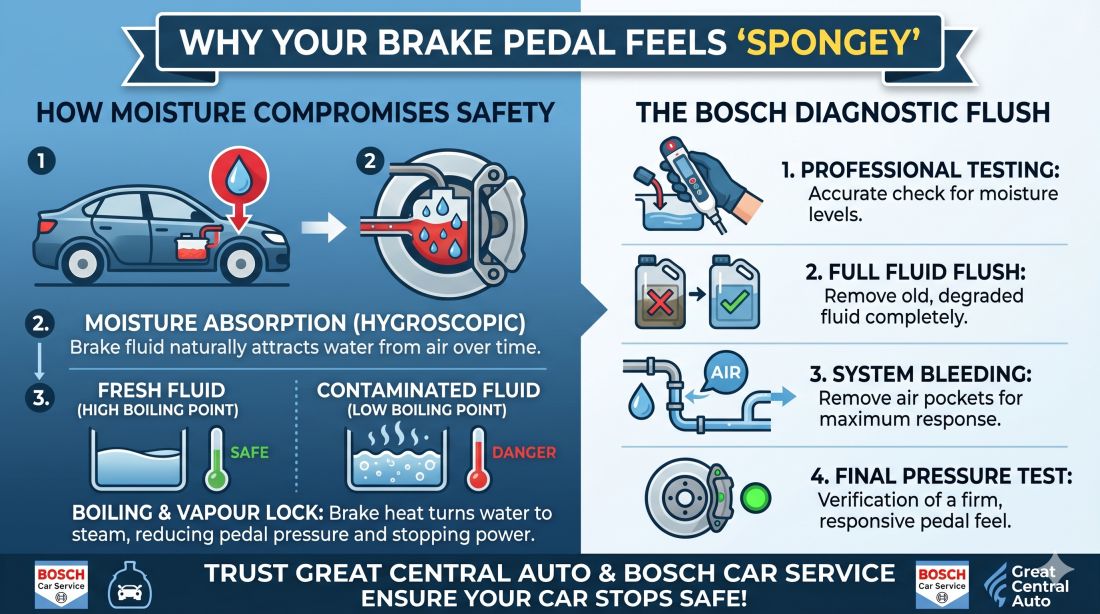
The most common cause of a soft or spongey brake pedal is moisture contamination. Brake fluid is hygroscopic, meaning it naturally absorbs water from the air over time.
The Boiling Point Drop: Fresh brake fluid has a very high boiling point. As it absorbs water, that boiling point drops significantly. During normal driving, your brakes generate intense heat. If your fluid is contaminated, the water turns into steam. Unlike liquid, steam is compressible, which causes that "mushy" feeling when you press the pedal.
Air in the System: If the seal in your master cylinder or a brake line is compromised, air can enter the hydraulic lines. Because air is easily compressed, your pedal will travel much further to the floor before the brakes actually engage.
Why You Shouldn't Ignore Brake Fluid Maintenance
Brake fluid is the unsung hero of your vehicle's safety system. Beyond the loss of stopping power, moisture-laden fluid leads to:
Internal Corrosion: Contaminated fluid causes rust on the interior of your brake lines, master cylinder, and ABS modulator, turning a simple flush into a complex and expensive repair.
Inconsistent Performance: Your brakes may feel "okay" in light traffic but fail when you need them most, such as during emergency stops or heavy load conditions.
How Professionals Diagnose Brake Health
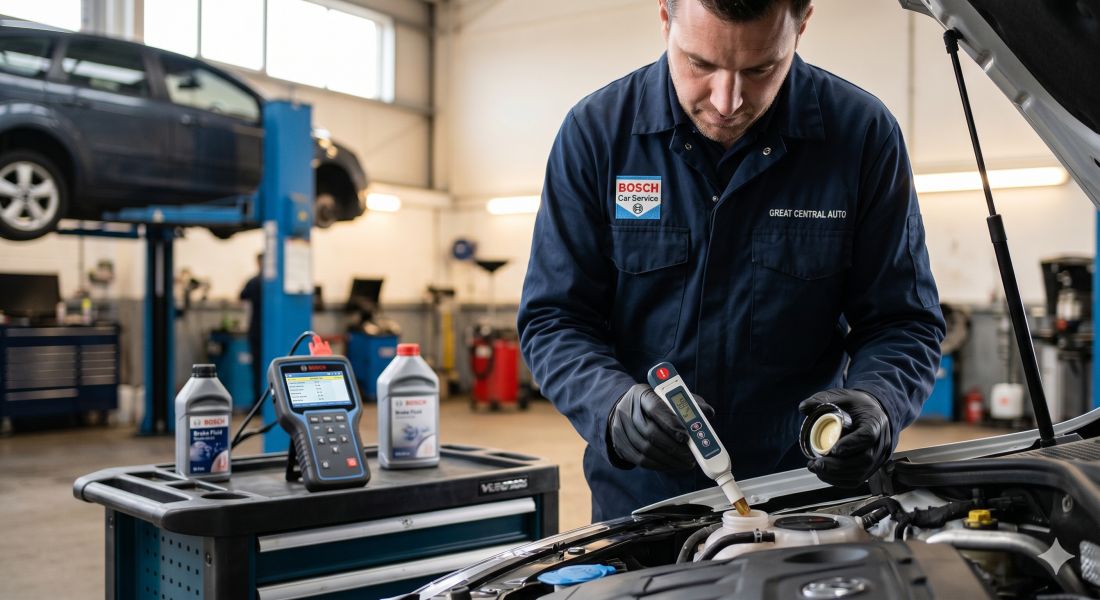
At Great Central Auto, we don't rely on guesswork. We use advanced Bosch testing equipment to measure the exact boiling point of your brake fluid.
Fluid Analysis: We test the moisture content and boiling point of your current fluid to see if it meets safety standards.
System Flush: If the fluid is degraded, we perform a complete system flush, purging the old, contaminated fluid and replacing it with high-quality, manufacturer-specified fluid.
Pressure Test: We check the entire hydraulic circuit for leaks or air pockets to ensure your pedal feel is firm and responsive.
When to See a Mechanic
You should have your braking system inspected if:
The brake pedal feels soft, spongey, or goes closer to the floor than usual.
Your car has not had a brake fluid flush in over two years (or per your manufacturer's service interval).
You notice any warning lights related to your ABS or Brake system.
Is your pedal feeling less than firm? Don't leave your safety to chance.[Book a Brake System Health Check at Great Central Auto in Rugby today.]